Financial Planning
Important Information!
Don't miss this section. Once you read it, read it again! Why? Because financial planning is all about setting your realistic goals for the future and then determining the steps you plan to take in order to reach those goals. It's not enough to do it once and check it off the list either. Financial planning is a step that you need to come back to again and again.
Take a look at the three tabs below to see what makes up this important part of your financial success.
The most important step in figuring out how you should handle your money is setting your goals. Figure out where you want to end up--both in the short- and long-term. Don't complicate this step by trying to write a full business plan. Get your basic ideas down and then you can start adding details.
Starting Information
Ask yourselves questions such as:
- Where do we want to be in 5 years? 10 years? 30 years?
- How much do we want/expect to save in these timeframes?
- What major purchases do we want to make in the future, and how far into the future will we wait?
Need Help with Tangible Goals?
Take a look at Financial Goals, the first of our 6 Days to Stronger Financial Responsibility.
Keep in mind that developing your financial plan is like drawing your concept before you develop the blueprint. There's a good chance that you'll change your goals as you actually start to build out your budget.
If you haven't already, see Day 2: Budgeting from our 6 Days to Stronger Financial Responsibility.
Is Budgeting Important?
Yes. Why? Setting a budget helps you form a realistic view of your cash flow. Creating your budget before you get married not only gives you a strong perspective on where you stand financially right now, but you also come away more prepared to build the prospective budget you should create together.
What Should Our Budget Look Like?
Start with two simple monthly categories: income & expenses . As each month ends going forward, begin tracking the exact amounts you earn and spend, so you can see your trends, progress and areas where you need to improve. For your initial budget, however, it's all right to work with close estimates.
Create a simple table like this one below.
| Income | Expenses |
|---|---|
| Income: $3,000 | Rent: $750 |
| | Utilities: $300 |
| | Food/groceries: $200 |
| | Gas: $150 |
| | Entertainment/Hobbies: $100 |
| Total: $3000 | Total: $1500 |
Income
Don't be alarmed when your expense category is a long list compared to one or two items in your income category. That's natural. Income includes your regular, anticipated revenue. Don't count birthday money or loose change you find on the pavement. Regular payments from your parents or investment income, however, can be included. The largest portion of this category, however, will probably be your paycheck.
Other Considerations:
- Use your net income rather than your gross income.
- Average your past few typical paychecks if you are an hourly employee rather than salary
- Budget low for investment income. There's less chance, then, of overestimating what you'll earn.
Expenses
 In your expenses, add anything that may affect you regularly: rent/mortgage, food/groceries, gas for your car, utilities, hobbies, car payments, car maintenance, clothing and even savings. When creating your joint budget, factor in any costs that you anticipate adding in the near future--maybe a house down payment savings or a children's education fund.
Then, start spending--on paper, that is. Spend all of your income into these categories, savings included. You'll see soon if there are any areas you need to adjust.
If your expenses are higher than your income, see where you can start cutting expenses. Think, also, how you should prioritize your payments if you're struggling to make payments or realize that you may start having trouble.
The Desired Difference
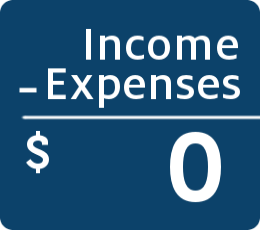 In the end, you want to subtract your expenses from your income and have nothing left over. If you have an amount left that you weren't anticipating, double check your math. Assuming everything checks out, you then have an extra amount to budget where you need it. Not a bad problem to have at all.
Again, treat this as a tool that you keep coming back to. Expect that your budget will change right along with life and that you will start to encounter unexpected expenses that need to be added. By staying on top of these figures, though, you can keep a good grasp of your financial situation and have a clear understanding of how much flexibility you really have with your money.
Past Influences
It's impossible to completely separate ourselves from our past influences. Nor should we try to. They're a key part of who we are. We may, however, want to learn from them.
But does it really matter how our parents have managed their money?
Yes. Even if you're fully aware of your parents' errors with money, you can still fall into the same traps. Why? Partly because you don't always think about the path that led to their missteps. It's easy to see those preliminary steps as familiar territory (i.e. "the way we did it when I was younger"). Here are some high-concern areas to think about so you don't relive their struggles with money.

- What was your parents' standard of living ?
- Did your parents save for their expenses?
- Were your parents regularly setting aside for retirement?
- How did your parents use credit cards? How many did they have? Did they max their limits?
- Did they accrue consumer debt they couldn't pay off right away?
- Did your parents make regular payments on any loans?
- Did your parents make purchases on impulse? Did they shop around for the best deal or even wait for a sale?
- Did your parents tend to cut expenses or take on more work to cover expenses as needed?
Take these questions as a starting point, but don't limit yourself to these talking points.
Present Habits
Of course, no matter how others around you have managed their money, your spending habits are ultimately your own. Talk through your present spending habits starting with the same questions you used for your parents..
In light of both past & present influences, what current habits do you need to change in order to have a stronger financial plan for your marriage?
Consideration: Should we sign a prenuptial agreement?
A prenuptial agreement (or prenup) tells the court system that there is mutual consent concerning assets that either person brings into the marriage and that those assets can be recognized as belonging to one or the other person. It's a way of protecting an individual's assets before that person commits to marriage.
While there are varied opinions on whether to sign a prenup, the pre-marital agreement can be beneficial for gaining an understanding of what assets both sides are bringing to the table.
Note: Prenups are not for every couple. Young couples who are just starting in their career and do not have many assets probably do not need a prenup. Also, if you do consider a prenup, understand that they aren't cheap. According to lawyers.com, expect to pay at least $1500 in legal fees to complete the agreement.
Regardless of whether you decide to move forward with a prenup, you should still talk in depth about your individual financial contributions to the marriage and make sure that you're truly on the same page about expectations for your money. Being open about this before the wedding can save you a lot of hassle in your marriage.
Future Obligations
You will most likely have expenses in your marriage that you don't have right now. That's pretty much a given. You may not be so sure, though, what those expenses will be, but they may include:
| Expenses | Potential Cost Areas |
|---|---|
| Home | Home maintenance; home additions; purchasing a different home for better accommodation |
| Children | Clothing; higher food expenses; education; sports/hobbies; gifts |
| Travel | Anniversaries; family vacations |
| Elderly Parents | Housing; health care; driving them around |
These are some of the more predictable payments, too. Make sure you also consider how much of a rainy day account you'll need. Some ideas from our Spending, Saving & Income page may help with that area.
Also, even though these are just potential payments, treat them as actual costs to you right now while you create your budget. While your potential budget is at best an estimate, the more specific you can be with it, the better understanding you'll have of your real financial situation going forward.