
6 Days to Stronger Financial Responsibility
Day 1: Financial Goals
Before you can get somewhere, you need to know where you’re going. That’s true with money, too. To be successful with your finances, you need a fixed idea of what the outcome should be and a defined plan for achieving that outcome. You don’t want to leave your future to chance, no matter how romantic that may sound.
To start your goal-setting, look at what you want and what is most important to you. Call it “prioritizing.” Maybe that’s saving for a car. Saving for college. Creating an emergency fund. Whatever it is, here’s the important part:
Write your goals down!
Writing down goals forces you to complete your thoughts. It also holds you to a higher level of accountability than when you're bouncing ideas around in your head, and seeing your written notes makes those less sensible goals easier to spot. ( e.g., I want to sail around the world in my own yacht before the age of thirty . )
Post your goals once they're written. Give yourself a visual on the fridge or the bathroom mirror so they keep staring you right between the eyes. Post them on places like Facebook as well so you can have a history to look back on and so your friends can help to keep you accountable. (You may even inspire them to set goals, too!)
Here are a couple keys to remember when writing:
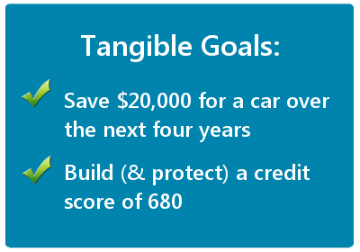
- Be specific. “To have low student debt after college” isn’t specific. Instead, narrow your terms. “To have 90% of student debt paid within 6 months of graduation” provides a much clearer target for you to aim for.
- Be realistic. Make sure your goals are reachable, too. You’re probably not going to become a millionaire by the time you graduate college while working a minimum wage job. Be honest; that's a little out of reach.
- Set milestones. Back to our original thought: you need to know where you’re going; to get there, you need a reasonable course and a reasonable amount of time. Add checkpoints along the way to make sure you're staying on course.
Whatever your goals look like, don’t expect to get there right away. Commit yourself to accomplishing them, and continually review your progress. Remember that life changes, too. You may need to adjust your goals along with your circumstances, so be reasonable as you review. And when you do reach your goals, does that mean you’re done? Not at all. It just means you’re ready to step back and see what great goals you can set for yourself next.
Day 2: Budgeting
As noted in the previous post, setting financial goals is important for good financial health. Unfortunately, your goals are just a detailed rendering of what the final product is supposed to look like. You still need a blueprint from which you can build your financial structure. You need a budget.
Your budget should fall right in line with the financial goals that you’ve just set. Don’t think of them as two separate chores to complete. Instead, look at budgeting as the natural outcome of setting your goals. Now that you’ve thought through your priorities, and you should make a plan to accomplish your objectives.
So how do you start?
Just as you did with your goals, write your budget down. Start with your priorities again. Using a budget calculator never hurts either. You could even use a simple spreadsheet.
Points to remember:
- Know your spending habits. Do you drive a lot? Do you shop retail? Do you go out with your friends at night? You’ll need to factor these habits in to see how much income you need to support your lifestyle.
- Work from your predictable net income. That’s after-tax income that you can regularly count on. Not winnings from last week’s lottery scratch card or even from this weekend’s side job. It also doesn’t include the amount that the government takes out from your gross wages.
- Don’t forget interest. Unless you’re borrowing from Grandma, there’s an added charge for the privilege of using someone else’s money. (Even then, some grandmas might not be so generous!) Whether it’s paying off a car or a card, make sure you factor in the interest to be accrued. You can figure it by using a calculator like this one.
- Spend it all! Spend all your money on paper before you ever spend a dime of your real money. That includes all the money that you'll put into your savings and investments, too.
Now step back and look
 If you realize your spending habits get in the way of reaching your goals, you need to adjust either your goals or your spending. Look for small, manageable changes to your lifestyle. Instead of going out every night, limit yourself to one or two nights a week. Instead of buying retail, try bargain shopping. Walk or ride a bike occasionally to save on gas and parking. It’s amazing how little changes can add up to something substantial. If these smaller changes still don't work for you, there are really only two ways you can balance your budget: spend less or earn more, so consider if you're willing to work more to support your already-cut spending.
Once you have your balanced budget, give your budget away. Give it to a financially responsible parent, aunt or uncle, grandparent, or other who will keep you accountable. Submitting yourself to this kind of scrutiny seems scary, but it’s actually a good thing. Whomever you give it to is then a part of your team and is someone you can hopefully even count on for guidance.
Review and adjust your budget each month, and track your progress. Most of all, don’t quit! When you stick with it, you’ll have a good framework to build your financial security around now and in the future.
Day 3: Checking
Checking accounts carry a number of great benefits. They provide an easy-to-access area for holding your money; they’re a great way to avoid carrying cash with you; and they may even pay interest to you depending on your financial institution and its account terms.
But . . .
With the added convenience of being able to “sign and go” comes an extra precaution. Unlike a cash payment which is gone as soon as you hand it over, your check or debit card transaction doesn’t clear that same instant.
Here's what happens.
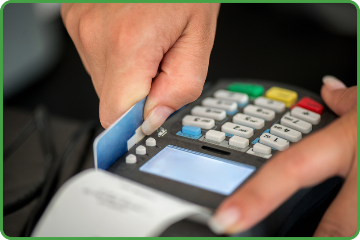 When your payment is communicated to the bank, the bank moves the money from your available balance where it has three days to get approved. If the payment doesn't clear by then, the amount is put back into your available balance. But that doesn't necessarily kill your transaction. Legally, that transaction can be run again up to six months from the time of the purchase! If you’re not aware that one of your pending payments is still pending, you could end up overdrawing your account when it finally clears.
That’s where knowing the difference between your current balance and available balance makes a big difference.
Your current balance is the amount of money in your account at the beginning of a business day, but it doesn’t account for those pending transactions that still need to be approved. On the other hand, your available balance considers the pending transactions that have been reported to the bank, giving you a clearer projection of your available spending than your current balance offers.
Online banking is a helpful tool in viewing the difference between the two balances. However, online banking can only account for the transactions that have been communicated back to the bank. It can’t account for the check that you just wrote to your friend the other day.
The Best Way
The best way to track your true available balance and avoid surprises from forgotten transactions is to keep your own register .
You can find a register in the front of your checkbook, or you can even make your own with a spreadsheet. Record any money coming into or going out of your account, and compare your notes with the bank’s on your statement. This will give you a great way of auditing your own spending and, if any discrepancies show up between the two records, give you a visual record to show your bank when working to reconcile the differences.
Day 4: Savings
Short and simple: keep a savings account.
Whether that looks like a traditional savings account or takes the form of a money market account, have a way to set money aside from your main checking account. Make sure you can still access the money when you really need it.
Here are five reasons to consider saving.
- Out of sight, out of mind. If you're not looking at the funds in your checking account, you’re far less tempted to spend them.
- Save for a Specific Reason. Remember when you set your financial goals on Day 1? A savings account gives you an easy method of setting funds aside to a particular goal: whether it’s college, a car, a spring break fund, or even an annual expense like car insurance.
- Give Yourself Backup. Your savings account can act as a backup for your checking account. Even with the best recordkeeping, a life event (like a car wreck) could keep you from monitoring your account daily and create a situation where your account may be overdrawn. When your checking is tied to a savings account, you can avoid a number of fees and charges that come from any overdrafts.
- Earn Interest. Getting paid for saving money is always a plus.
- The X Factor. The unknown. You don’t know when your car will break down, when you’ll drop your phone, or when you'll face any other “what if” situation. And while you never can prepare fully for all of these, having money saved in an emergency fund will allow you to be ready for a lot of them.
Consider this.
Nothing says you're allowed to have only one savings account. You may want to have one saving account called College Fund, another called House Fund, and even another as your Emergency Fund. You may not reach as high a tier for earning interest as you will by keeping all of your savings together, but you will have more defined lines between the accounts being used for different goals.
So get exploring. Review your budget, look at the savings options available to you, and start putting money aside for later. You never know when you’ll need it.
Day 5: Credit Cards
Credit Cards are perhaps the hottest topic within financial responsibility, but in no way are they isolated from everything else we’ve noted over the past four days. Credit cards . . .
- are important in helping you achieve your financial goals
- should be backed by the balances you maintain in your checking and savings accounts
- should be bound by the terms of your budgeted monthly spending.
Depending on how credit cards are used, too, they can greatly help or hurt your long-term borrowing potential by affecting your FICO Score.
What exactly is the FICO Score?
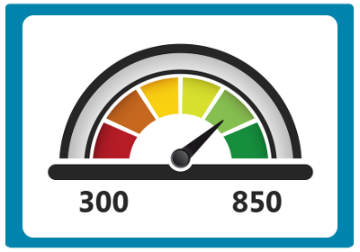 According to FICO, the Score is a “global standard for measuring credit risk in the banking, mortgage, credit card, auto and retail industries.” 1 It’s a general way for businesses to gauge the potential of you paying back the money you borrow on credit. Your score is based on factors such as your payment track record, the length of your credit history, and the types of credit used--including credit cards.
If you’re planning on making big purchases in the future, you’ll most likely need to have credit built up, and the higher the score, the better. A borrower with a higher score is most often perceived as less risky to lenders than those with a lower score, and your hard work in building and protecting a strong record could mean lower interest rates and more flexible terms when it’s time to make that large purchase.
Here are some smart practices to help you get there.
- Keep your balances low. Pay your cards off as you go. Don’t let your purchases accrue only to have an insurmountable debt staring you down at the end of the month. A good goal is to stay below 30% of your overall limit.
- Use your card purposefully. You’d better think twice about pulling your card out for impulse purchases. Remember your budget and stay within the limits that you’ve set for yourself--not just the limits that the card company sets for you. If you don’t have the money in your accounts to cover the purchase, you probably don’t want to charge it to your card.
- Try to lower your rate. If you’ve maintained a good record on your credit card, contact the card company about lowering your rate. Be polite, but be persistent. Lowering your rate won’t directly affect your credit score, but it could make your monthly budgeting easier and may help you keep more money in savings for those future needs.
- Rome wasn’t built in a day. And neither is good credit. It’s an ongoing process that can be years in the making, and it’s even more of a struggle if you’re trying to repair your past credit mistakes. History is your FICO Score's best friend. How you pay your bills today will affect your score for even the next seven years!
The big key to building or improving your credit is to plan ahead. Review your financial goals to remind yourself of what you plan to purchase later on and adjust your spending to match those goals.
- MyFICO: www.myfico.com/crediteducation/whatsinyourscore.aspx
Day 6: Tracking
Whether you’re heading back to school or going through the daily grind, make it a point to track your financial progress. You’ve done the work to lay out your goals and to build a budget around them, and you’ve set up your accounts to mirror that fantastic budget. Don’t let your work go to waste by not following up on your financial activity.
“But why should I spend time tracking? The bank does that for me.”
As we noted with checking accounts , the bank can record only those transactions that are communicated to it. If there are errors or missed items, you could end up paying money you weren't planning on spending.
Tracking your accounts personally also keeps you accountable to your own goals and to your budget . Working through your deposits and withdrawals is essentially forcing yourself to sign off again on your activity.
What should tracking involve?
- Keep your receipts. Yes, those little pieces of paper that show you’ve made a purchase. It may seem like a hassle, but you’ll regret throwing them away as soon as you have a question about your transaction history.
- Update your register. Whenever you make a purchase, mark it down. When you deposit a check, write it down. Your receipts will also help you remember all of those purchases that should be on the register.
- Review your statements and balance it with your register.
- Use online banking. Even if you find you never use [online banking] for making transfers or other transactions (though these are really great features to use), you can still use it for tracking your account activity any time through the month. You don’t need to wait for your statements to be sent to you and you can access your history for the past year if any issues should arise.
- Reconcile differences immediately. If some part of your account seems off, contact the bank right away. (If your credit card statement is off, contact your credit card company.) Don't wait for the discrepancy to "sort itself out." Unresolved differences can end up hurting your credit score and your financial future.
So What Now?
Financial responsibility isn't rocket surgery. You don't even need a business degree to do it well. You just need to set aside enough time to think through your spending and saving and then have the commitment to stick with what you've written down.
Whether you're back to school or off to work, start with the suggestions we've offered here to get you on the right path. If you have questions on the financial tools available to you or how to walk through any of the steps, contact our branch nearest you . We're glad to help you on the road of financial responsibility.
